
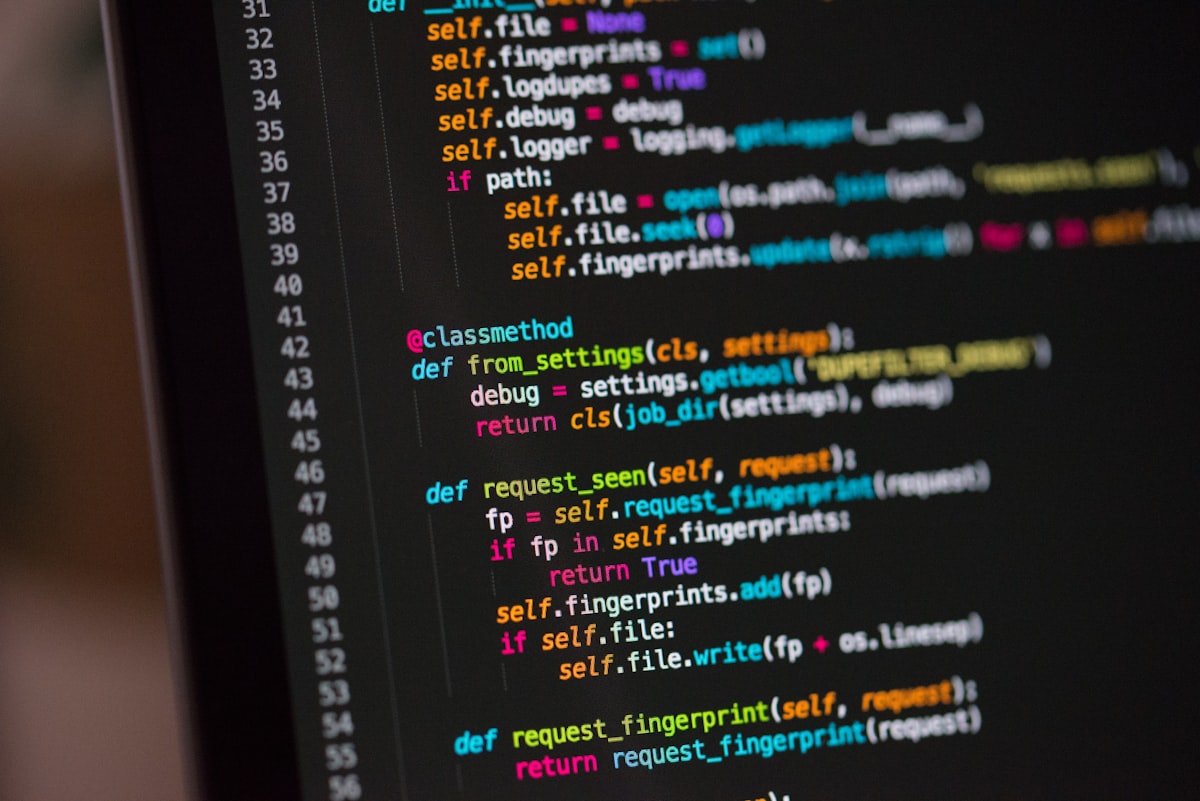
Vibe coding is an AI-based programming method that is fundamentally transforming the software development process. Instead of writing tedious lines of code, developers express their ideas in natural language, which artificial intelligence then translates into functional software. This conversational approach forms the foundation of a new mindset gaining momentum worldwide. But how does it work, what are its inherent advantages and disadvantages, and what should we prioritize when adopting this method?
What is Vibe Coding?
Vibe coding is not just another industry buzzword; it is a legitimate alternative programming methodology. Its essence lies in replacing specific syntax with natural language descriptions. The developer articulates a concept, and the AI generates understandable, working program code from it. In this paradigm, the developer shifts from being a “coder” in the classic sense to a creative director who uses AI to implement their vision.
The term was coined by Andrej Karpathy, co-founder of OpenAI, after he built a custom application entirely with AI-generated code. He didn’t write a single line by hand; instead, he used natural language instructions to guide the model, which assembled the entire application step by step.
This workflow reframes human-machine collaboration. It is no longer just about AI “assisting” with minor tasks, but about becoming a full-fledged creative partner. This is where the “vibe” factor enters the equation. The programmer doesn’t micromanage the code at every moment; rather, they intuitively guide it, immersing themselves in the process. This form of programming feels more like improvisation than traditional task-solving. This is what Karpathy calls the “vibe,” and it is a style an increasing number of developers are embracing.
Dialogue Over Instructions
Vibe coding is built on ongoing, natural language dialogue rather than a rigid series of commands. The developer does not start with a finalized specification; instead, they provide examples, formulate concepts, and iteratively test what the AI creates. It is a conversational loop: you propose an idea, receive a response, and then refine, clarify, or reinterpret the output.
This method requires a fundamental shift in mindset. Success depends less on knowing every nuance of a programming language and more on the ability to clearly articulate ideas. This is the core of “prompt engineering.” As more tools enter the market—such as ChatGPT, Claude, Cursor, Replit, and Gemini—knowing how to speak effectively to AI becomes a critical skill.
However, successful vibe coding requires more than just good prompting; it demands constant monitoring of the output quality. In this model, the developer acts as a quality inspector. While the AI performs the “industrial labor,” strategic management and final control remain firmly in human hands.
How is This Different from Classic Programming?
A key distinction is that this method does not strictly adhere to traditional development lifecycles. In classic development, we follow a linear path: design, modeling, database architecture, and then manual coding. In vibe coding, these stages often merge or are bypassed entirely. AI rarely asks for clarification on an ambiguous architecture; it simply attempts to satisfy the prompt. Sometimes the result is brilliant; other times, it misses the mark.
This “flow-like” creation is both inspiring and risky. It is exciting because you can validate an idea in minutes that would previously have taken days to code. But it is dangerous because if you don’t understand what the model is doing “under the hood,” you may end up with a codebase that is impossible to maintain or hand over to another developer.
In classic programming, readability, conventions, and documentation are paramount. Vibe coding, by contrast, tends to generate “disposable” code—meant to be tested quickly and either kept or discarded. While ideal for prototypes and hobby projects, it requires significant caution in production environments.
The Benefits of Vibe Coding
Vibe coding is gaining popularity because it offers advantages beyond mere speed, particularly regarding accessibility and creativity.
- Lightning-Fast Prototype Development: Because AI can generate vast amounts of working code instantly, it dramatically shortens development cycles. Ideas can be stress-tested in seconds rather than weeks.
- Stimulating Creativity and Innovation: Vibe coding allows developers to stay in a state of “flow.” By offloading monotonous tasks to the machine, the programmer can focus on high-level problem-solving. AI-suggested concepts and automatic generation encourage experimentation with bold ideas, as a failure no longer represents weeks of wasted effort.
- Technology-Neutral Creativity: You no longer need to spend years mastering a specific framework just to implement a good idea. You simply articulate the concept, and the AI attempts to produce it using the requested technology stack.
- Lowering the Barrier to Entry: People with no prior programming background can now create usable scripts, websites, or apps. Whether this is a benefit or a source of chaos is up for debate, but the reality is that the entry barrier to coding has been significantly lowered. This empowers more people to automate their own work and save time.
- New Learning Opportunities: Vibe coding is useful for veterans too. Many senior developers agree that AI-assisted generation allows them to familiarize themselves with new languages and frameworks much faster. AI acts as a “guide” through unknown systems, shortening the learning curve—though it does not replace deep expertise.
The Challenges of Vibe Coding
Before assuming that “AI will take your job,” we must look at the real risks. One of the greatest dangers is code quality. AI frequently generates redundant, unoptimized, or even insecure code. If the “developer” doesn’t understand the underlying logic, bugs become nearly impossible to identify and fix.
Security risks are particularly critical. There are documented cases of developers building entire web apps via AI, only to have them compromised days later due to inherent vulnerabilities. AI is no substitute for conscious architectural design, and it does not always follow security best practices or “clean code” principles.
Scalability is another hurdle. Vibe coding works well for simple, single-file applications, but AI can lose its way in complex, multi-file projects. It struggle to maintain consistency across a large project structure over the long term, requiring manual intervention from the developer.
Tools and Implementation
There are significant differences in how various language models interpret your intent. Whether you use GitHub Copilot, ChatGPT, Claude, or Gemini, each has unique strengths. In my tests, giving the same prompt to different models yielded completely different results—some were spot-on, while others were nowhere near the desired outcome.
As a developer, I believe the bare minimum is to have your own customized GPT trained on your specific coding methods, preferred libraries, and architectural solutions. I personally use several “Developer GPTs” tailored for different environments and task types.
The Community’s Perception
This topic is highly divisive. Supporters are passionate because they can finally focus on creative problem-solving rather than syntax. Many find that this method provides a genuine “flow” experience, which is invaluable in the startup world where rapid prototyping is a competitive advantage.
Conversely, critics highlight poor code quality and the creation of “black box” systems that are hard to read and vulnerable to attack. Debugging is a major pain point if the user does not understand the code the AI wrote. In a team environment, maintainability becomes a serious obstacle.
AI is a Companion, Not a Substitute
I take a middle-ground approach. Vibe coding is an incredibly useful method when applied in the right context. It is perfect for prototyping, experimentation, and quick validation, but it should not be relied upon exclusively for critical production systems.
Often, a purely “vibe-based” approach fails because the AI lacks context regarding the specific environment or end-use. Therefore, theoretical background knowledge has become more valuable than ever. Real expertise has never been about knowing syntax; it has always been about problem-solving.
We have entered a new era. As developers, we must integrate AI into our daily workflows. Ignoring this shift is a dead end. While our methodologies and strategic thinking must change, the conscious use of AI does not diminish a developer’s value—it offers new opportunities for speed, scale, and creative expression.